Viser opslag med etiketten Greenland. Vis alle opslag

mandag den 6. oktober 2014

Thule Airbase 2014

During late August I had the pleasure of doing a Narwhal-survey in Melville Bay in North-west Greenland. Mainly based out of Thule Airbase I had several opportunities to bird this quite big military base. Several small ponds and a bay with good mud flats during low tide makes this a very good birding area. Many different species of wader breed in the area. 
The permanents at the base called the summer of 2014 the worst ever. I actually got the meaning of "Mud Season" by the end of our stay. With rain, wind and temperatures close to 0 degrees it was not at all as I remembered it from my three previous trips in 2012. Due to the crappy weather we had several down days (not flying) which gave me some spare time for birding.  

28/8 American Herring Gull, Thule Airbase. Sorry for the poor quality but had to keep my eyes out for Polar Bears.
28/8 American Herring Gull Thule Airbase. 
28/8 Cackling Goose ssp. hutchinsii, Thule Airbase. 
28/8 Cackling Goose ssp. hutchinsii, Thule Airbase. 
Also got to see good numbers of the more common birds of the area. A white Gyrfalcon was seen almost daily and Ringed Plover, Red Knot, Turnstone and Sanderling were all fairly numerous. Passerines like Arctic Redpoll ssp. hornemanni, Lapland Bunting, Greenlandic Wheatear and Snow Bunting were all still common.

26/8 Arctic Redpoll at its roost, Thule Airbase. Not as many seen as on my last visits.
28/8 Purple Sandpiper, Thule Airbase. Local breeding bird but not seen during my last visit.
28/8 Greenlandic Gyr. One of the best raptors around
28/8 Greenlandic Gyr. Flew down to inspect me
28/8 Greenlandic Gyr trying to catch gulls. 
26/8 Arctic Hare. Very confiding at Thule.
RDN
lørdag den 5. januar 2013

Greenlandic Gyr Falcon

Greenlandic Gyr Falcons are probably my favorite birds of prey (at least of the ones I've seen). They live in really remote places and stay there for most of the year being quite rare outside their breeding areas. I've seen on them on both coasts of Greenland and on Baffin Island in Canada. Birds are often seen inside settlements outside the breeding season. Last year (2012) a pair with their young favored a rocky area just north of Thule Airbase and it was possible to get within a few meters of the birds (unfortunately the birds left a few days before my arrival). The bird depicted below was sitting on some wires outside the airport in Clyde River on Baffin Island. A trip to high arctic does not provide many species but surely some of the best!

Clyde River, Canada - August 2009
RDN

lørdag den 8. september 2012

Gulling Ilulissat

Thule Airport closes at 1530, local time. Due to time difference and sheer distance it is not possible for us to go all the way from Akureyri to Thule in one day. Therefore we have a stopover in Ilulissat - the tourist capitol of Greenland. Ilulissat is a nice place with a high standard of life - you should go there once in life, at least! Regarding wild life there is not that much to see but that's how it is all over Greenland.
If you go in April/May there are Bowhead Whales south of Disko - a species still recovering from the excess hunting several hundred years ago but they are almost guaranteed even though you might have to use all your savings to get there (much easier in a Twin-Otter;-)) The summer will have good numbers of Humpback Whales all over the Disko Bay and with the Icefjord as a backdrop it simply does not get any more beautiful. Hornemanni Arctic Redpolls are common in winter, spring and aumtumn but leave the town during the breeding season (the same for white Gyr Falcons).

27/8 1. cal Glaucous Gull in Ilulissat (Bird 1). Young glaucous are often very approachable in the harbor where they are taking the leftovers from the local fishermen.


27/8 1. cal Glaucous Gull, Ilulissat (Bird 2).

27/8 1. cal Glaucous Gull in Ilulissat (Bird 3).
27/8 The fresh water reservoir in Ilulissat often has a lot of roosting gulls. Often one can find the highest numbers of Iceland Gulls here, all though they sometimes use the cliffs on the northern side of the harbor. Notice the Black-headed Gull in the left corner of the picture, my first in Greenland!

27/8 Black-headed Gull. Not quite like Aarhus Harbor..

27/8 Hopefully the worst picture of Black-headed Gull you will ever see on this blog!

27/8 Black-headed Gulls can be seen all along the western coast of Greenland getting more and more scarce/rare the further north you come.
RDN

torsdag den 6. september 2012

Double Dark Fulmar

Being back in Qaanaaq for two short days I managed to get some crappy video/pictures of the local Fulmars. Most of the Fulmars were already gone from the area with negative temperatures already present throughout the day. The video is taken with a hand held Canon Powershot SX40 HS.


1/9 Fulmars in Qaanaaq.

1/9 Fulmars in Qaanaaq.
RDN

søndag den 26. august 2012

Qaanaaq

Qaanaaq is something completely else than Thule. Eventhough the two places arent that far from each other the difference is huge. In Thule you can get everything - in Qaanaaq you can't. But when in Qaanaaq you really get the greenlandic feel. After a long day of surveying we landed in Qaanaaq late in the afternoon. We asked Hans from the only hotel in town to come pick us up which he kindly did. Halfway on our way from the airport to the village the road had been washed away, this had happened in only 20 minutes, so we had to wait over an hour for it be fixed.  

4/8 The local stadium in Qaanaaq. Just imagine the new Ronaldo learning his tricks here. At least the view is nice!
4/8 Our Twin-Otter in the airport in Qaanaaq. Compared with the Partenavia we use for aerial surveys in Denmark a Twin-Otter is huge. This is one of the planes used for transport of food to the various Sirius Huts. The plane can make the propellors go the "wrong" way enabling it to take of and land on very short runways. Our two pilots are taking a short break before another long flight.
Snow Bunting is the most common bird (>100 birds seen) within the village with smaller numbers of Arctic Redpoll and Raven also present. One day we even had two Lapland Buntings, a scarce bird this far north (Salomonsen 1967). Fulmars and Kittiwakes are very common with fewer Arctic Terns and Glaucous Gulls. Black Guillemot, Bruennichs Guillemot and Little Auk are all common with the latter seen in thousands. 
Several groups of Harp Seals were seen hunting fish just outside the village. The local hunters don't shoot them as they cannot sell the fur anymore.   

4/8 Harp Seals are great to watch. This group was hunting fish just outside of Qaanaaq with the gulls getting the leftovers. 

4/8 Harp Seals are often seen in tight groups consisting of many animals. They often swim with their belly up giving them a very whitish appearance. Actually they are so lively in the water that inexperienced observers might mistake them for dolphins.

4/8 Double-Dark Fulmar in Qaanaaq. I saw 5-10 of these very dark Fulmars in Qaanaaq with the majority of the birds there being "normal" or "single dark". In some weather conditions these DD Fulmars looked almost completely dark - tricky birds if seen poorly on a grey day on a sea watch....

RDN

mandag den 20. august 2012

Thule Airbase

Having not previously visited the extreme north-western Greenland (besides a short fueling visit to Qaanaaq in April) it was with great expectations that I took off from Copenhagen on the 28th of July. The main purpose for the trip was to do an aerial survey of the Narwhals summering in the Melville Bay. We stayed at Thule Airbase during the weekdays and in Qaanaaq in the weekend as the airport in Thule Airbase was not open during weekends. 
Thule Airbase was build in 1953 forcing the locals to be relocated to Qaanaaq further north (not our proudest moment....) and was during the Cold War home to several thousand american soldiers. During our stay the total "population" was around 600 people. Thule Airbase is a very different experience when compared to the rest of Greenland, especially the more extreme villages (e.g. Upernavik and Qaanaaq).
Wildlife was quite good with several Arctic Fox families within the base and some very approachable Arctic Hares. Snow Bunting and Arctic Redpoll were the most common birds near the buildings but small lakes in the area had Red Knot, Common Ringed Plover and Bairds Sandpiper. Bairds is a scarce breeding bird in the Thule Area which is also the only place in Greenland to see it. In the bay Little Auks, Common Eiders, Black Guillemots, Kittiwakes and Fulmars were common. In the vicinity of the base we had white Gyr Falcon and a single Great Northern Diver (both from the plane). Two Polar Bears vistited the area during our stay but unfortunately we did not see any of them.   

1/8 Arctic Fox cub, Thule Airbase.

1/8 Arctic Hare, Thule Airbase. The hares are quite confiding.

1/8 Arctic Hare, Thule Airbase.

1/8 Arctic Hare, Thule Airbase.

2/8 Adult Bairds Sandpiper. The only bird I saw during my stay. The Thule Area is the easiest place in Greenland to connect with this species. Thayers Gulls may breed in the Thule/Qaanaaq Area but I did not see any. Hopefully I will find some on the next trip (two more to go!).

2/8 Common Ringed Plover. The most commonly observed wader in the area.

2/8 Typical Thule scenery. Not the most beautiful place in Greenland...

2/8 Cotton Grass sp, Thule Airbase.
RDN  

onsdag den 30. maj 2012

Rostrata's from Greenland

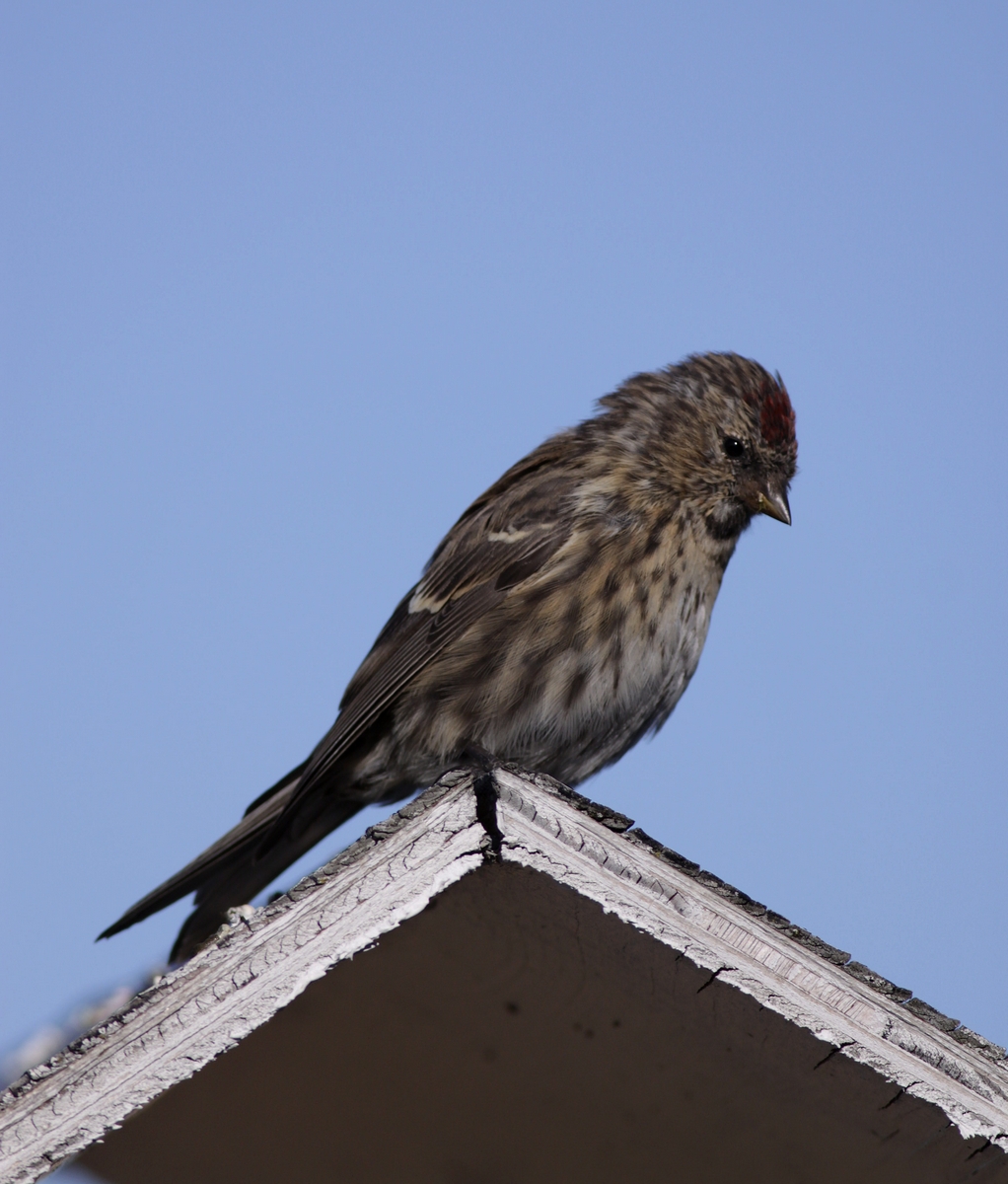
Due to a recent discussion about redpolls on birdforum I post pictures of rostrata's from Greenland. The first four pictures are from Kangerslussuaq with the rest being from Ilulissat.
Kangerslussuaq, September 2009

Kangerslussuaq, September 2009

Kangerslussuaq, September 2009

Kangerslussuaq, September 2009 (same bird as on picture above)

Ilulissat, September 2009

Ilulissat, September 2009

Ilulissat, September 2009

Ilulissat, September 2009

Ilulissat, September 2009

Ilulissat, September 2009
RDN

mandag den 30. april 2012

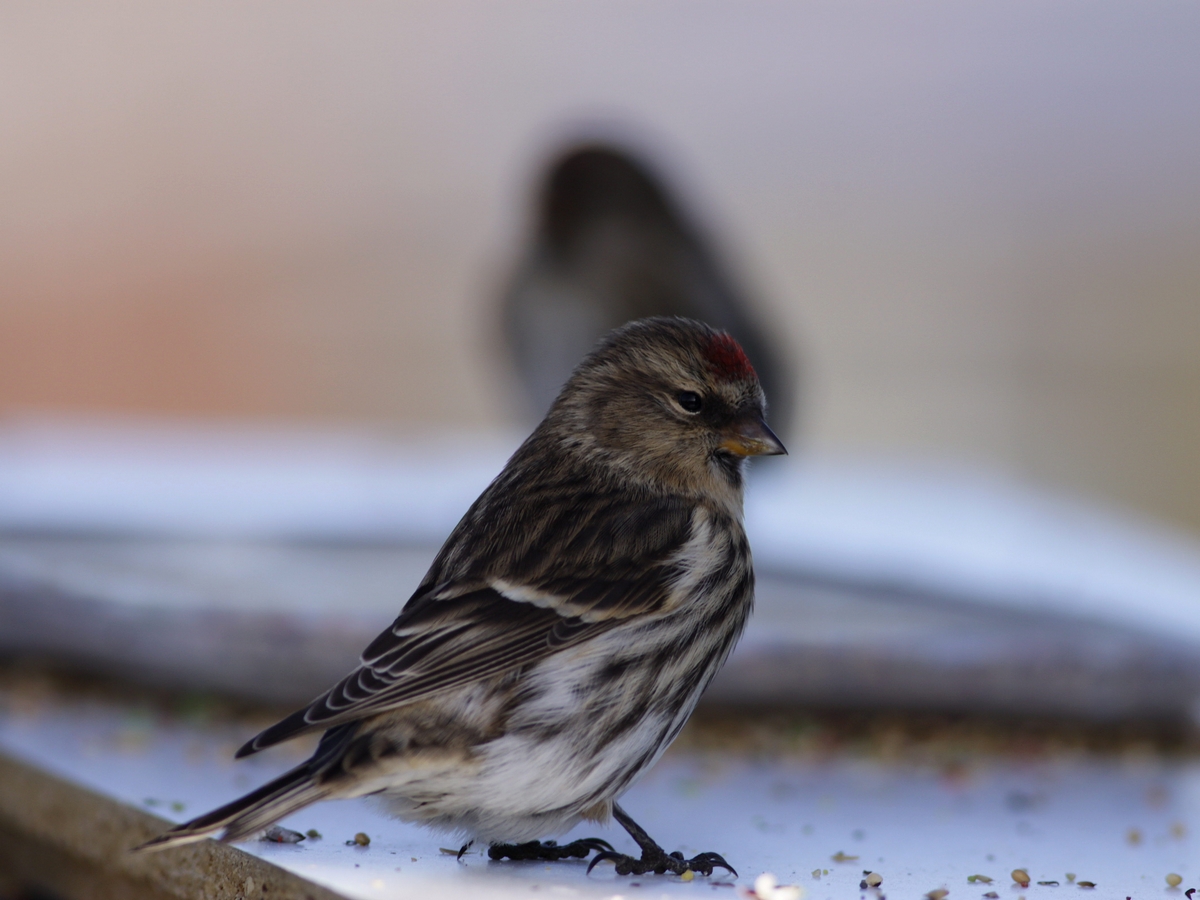
Greenland Redpoll ssp. Rostrata?

I managed to find two possible rostrata Redpolls in Kangerslussuaq. Brids were picked out by smaller size, more heavily marked flanks and undertail coverts and more brownish/dark overall impression. Some of the Arctic Redpolls (probable sec. cal. year birds) almost had similar flanks as the rostrata birds but the undertail coverts always gave them away. In summer Redpolls are very common breeders in the area. 

So is it a rostrata or a dark hornemanni? Other birders (Rune Sø Neergaard and Yann Kolbeinsson) suggest that it might be a dark hornemanni? The flank stripes and the general color of the bird could definitely be a hornemanni but what about the undertail coverts? Hornemanni has always been the "whitest" of redpolls to me but then again I haven’t really seen that many..    
 
24/3 Kangerslussuaq. The two birds also had a chinese look but the face is not as clean when compared to the Arctic Redpoll to the right. The flanks clearly more striped.

24/3 Kangerslussuaq. Darker overall impression with the flanks stripes being broader and more

24/3 Kangerslussuaq. The undertail coverts. I did not see any clear cut hornemanni with more than one black stripe in the undertail coverts

RDN

fredag den 27. april 2012

Hornemanns Arctic Redpoll


Arctic Redpoll of the subspecies hornemanni is common along the west coast of Greenland outside their breeding season. I found a feeding station with 50+ birds in Kangerslussuaq which is the first place many people will come to if they travel to Greenland, as this is the place of the main international airport. Most of the birds present were readily identified and even their call seemed to be quite different from the redpolls I usually hear in Denmark being more metallic and not as sharp. Sometimes they even gave a call superficially resembling that of Snow Buntning (a bird also found coming to the feeding station). Some birds did have quite well-marked flank stripes but I guess these most have been 2. cal. year birds.  


24/3 Kangerslussuaq. When flying they appear "much" larger than their european counterparts.

24/3 Kangerslussuaq. The chinese look.

24/3 Kangerslussuaq. Birds were actively feeding in the cold weather (-12 degrees).

24/3 Kangerslussuaq

24/3 Kangerslussuaq
RDN